The Hidden Costs of Summer: Mastering Workforce Absenteeism During Heat Waves
Table of Contents The Rising Threat of Extreme Heat How Heat Waves Drive Workforce Absenteeism The Cumulative Impact on Productivity.


Table of Contents The Rising Threat of Extreme Heat How Heat Waves Drive Workforce Absenteeism The Cumulative Impact on Productivity.
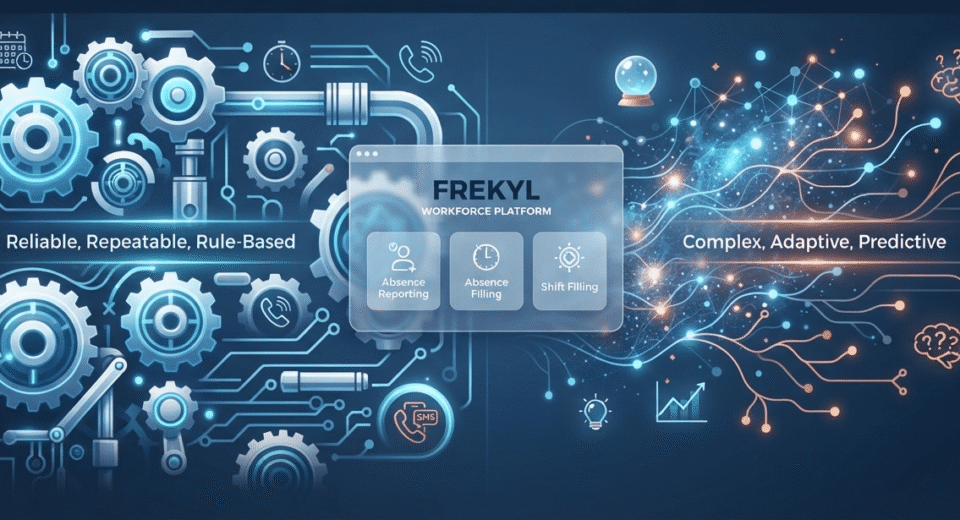
Table of Contents The Hype Machine: Why AI is Stealing the Spotlight Defining the Difference: Automation vs. AI The Reality.

Table of Contents The Aerospace Production Dilemma Why Manual Scheduling Fails in 2026 The Power of Automated Absence Management Keeping.

For Operations Managers and HR leaders, managing unplanned absences is a constant logistical puzzle. When an employee calls in sick.

For nursing leaders and hospital administrators, the Magnet gold standard is more than a trophy. It is an affirmation of.

Most businesses treat absence management as a “necessary evil.” It’s an administrative checkbox—a way to track sick days, stay compliant,.

Optimizing an organization requires aligning two core forces: its people and its processes. For Human Resources, the primary objective is.

If you are an HR leader or Operations Manager, you already know the routine. Your team spends three weeks preparing.

For many organizations, employee call-offs are treated as a routine operational inconvenience. Someone calls in sick. A supervisor gets notified..

Every operations manager knows the feeling of a 5:00 AM phone call. It is usually an employee calling out sick.